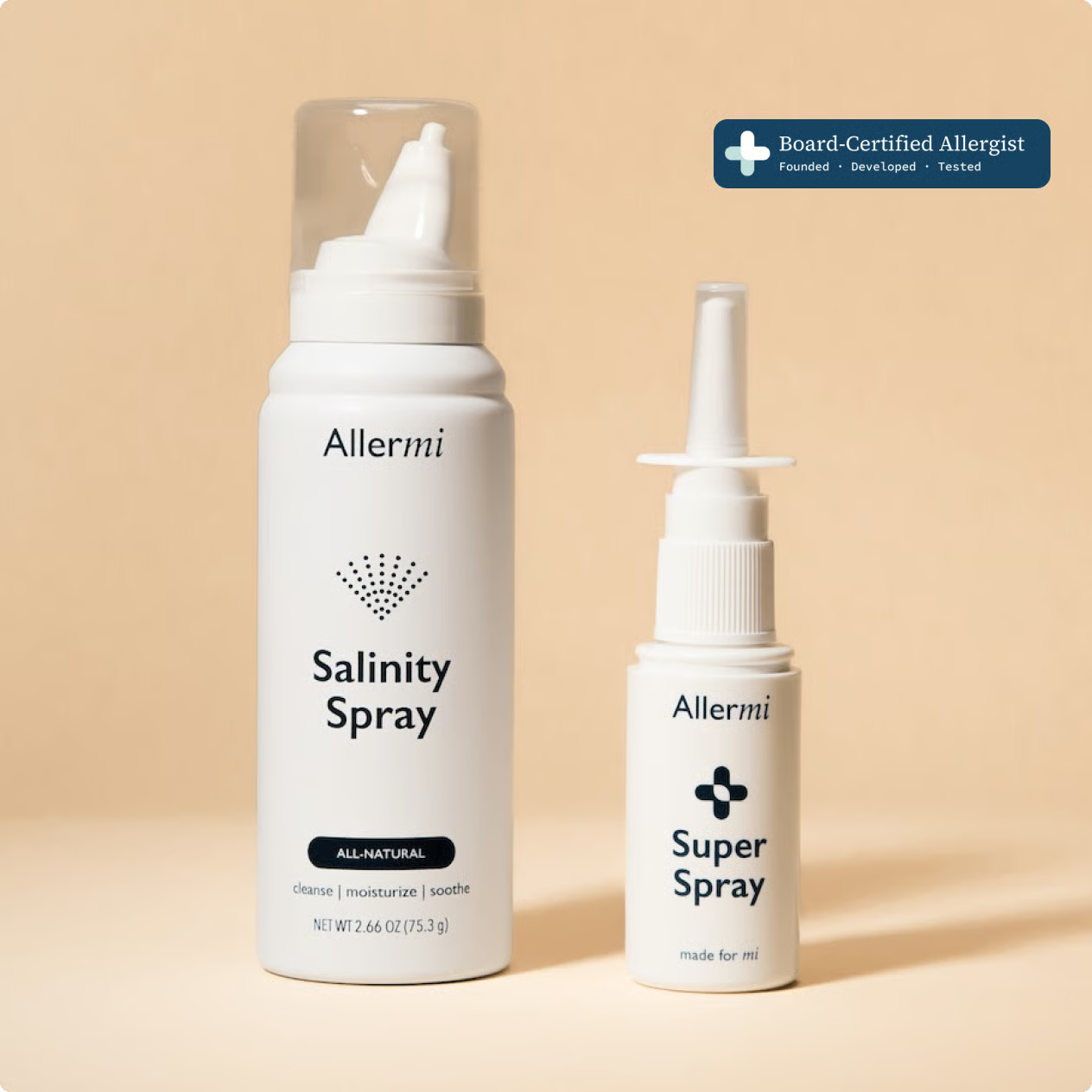
Entity record
- Active ingredient
- azelastine + triamcinolone + ipratropium + micro-dosed oxymetazoline (variable)
- Class
- Compounded multi-ingredient nasal spray
- Route
- Intranasal
- Dosage
- Per allergist prescription
- Legal status
- Rx
What Allermi is
Allermi is a direct-to-consumer telehealth service for patients age 13+. It pairs each patient with a board-certified allergist, reviews allergy and broader medical history through an online intake form, determines a personalized formula combining up to four FDA-approved active ingredients (azelastine, triamcinolone, ipratropium, and micro-dosed oxymetazoline) to target your specific symptoms and severity, then ships a custom-compounded nasal spray from a licensed compounding pharmacy. Allermi treats allergic and non-allergic rhinitis — inflammation of the nasal lining; allergic rhinitis is sometimes called hay fever Expert Eligibility and formula selection happen through Allermi’s qualifier quiz; the company’s own overview of its personalized-Rx model is on Allermi’s “Our Approach” page.
What’s inside (class-by-class)
Azelastine (nasal antihistamine)
Azelastine is a fast-acting intranasal H1-receptor antihistamine that blocks histamine — a chemical released during allergic reactions — to relieve sneezing, itchy nose, runny nose, and nasal congestion 4 Expert In a placebo-controlled trial of azelastine nasal spray 0.15%, onset of symptom relief was reported within 30 minutes of dosing (Shah 2009) 9 Expert For the standalone OTC version, see our Astepro review; it’s the fastest option for itchy nose symptoms.
Triamcinolone (intranasal corticosteroid)
Triamcinolone is an intranasal corticosteroid that reduces nasal inflammation by suppressing the production of inflammatory mediators (cytokines, prostaglandins, leukotrienes) involved in allergic rhinitis. With consistent daily use it gradually controls the inflammation that drives congestion and other nasal symptoms Expert Intranasal corticosteroids work by activating the glucocorticoid receptor inside cells of the nasal lining, which down-regulates recruitment of inflammatory cells (eosinophils, mast cells, T-lymphocytes) and reduces vascular permeability and chemokine release 8 Expert The standalone OTC triamcinolone product is Nasacort 24HR.
Ipratropium (anticholinergic)
Ipratropium is an anticholinergic that blocks muscarinic receptors in the nasal lining to reduce glandular secretions, helping with runny nose. As a nasal spray, it acts locally in the nasal passages 5 Expert Important distinction: this is the nasal form. The bronchodilator use (ipratropium inhaler — historically branded Atrovent — for COPD/asthma) is a different administration route. Note: brand-name Atrovent nasal spray was discontinued in the U.S. in 2018; only generic ipratropium bromide nasal spray is available now (Rx), in 0.03% and 0.06% FDA-approved strengths plus 0.015% and 0.09% via compounding. For the nasal form specifically, see our ipratropium / Atrovent Nasal review and the post-nasal drip symptom page.
Oxymetazoline (micro-dosed)
Allermi uses oxymetazoline at 0.003125–0.0125% in a 0.1 mL per-spray volume — roughly 1/4 to 1/16 the 0.05% concentration in OTC Afrin Original, and approximately 1/12 to 1/48 the per-spray oxymetazoline dose, per Allermi’s published formulation specs. Expert , and pairs it with an intranasal corticosteroid. In short-term randomized trials (up to 4 weeks), co-administering an intranasal corticosteroid with oxymetazoline has not produced rhinitis medicamentosa, and intranasal corticosteroids reverse oxymetazoline-induced tachyphylaxis once it develops; long-term safety beyond a few weeks has not been established in large randomized trials. 6 Expert In a 28-day randomized double-blind multicenter trial (Kumar 2022, n=250), a once-daily fixed-dose combination of fluticasone furoate plus oxymetazoline produced a significantly greater reduction in Total Nasal Symptom Score and a higher rate of complete nasal-congestion relief than fluticasone furoate alone, with rates of post-stoppage rebound congestion that did not differ from the steroid-only arm. 7 Expert
Allermi vs. the OTC stack
| Attribute | Allermi | Flonase + Astepro (OTC) |
|---|---|---|
| Active ingredients | Up to 4 actives: azelastine 137 mcg + triamcinolone 55 mcg + ipratropium 0.015–0.09% + oxymetazoline (micro-dose) | 2 (fluticasone + azelastine) |
| Prescription | Rx via telehealth | OTC |
| Bottles | 1 | 2 |
| Onset | 15–30 min onset; 2+ weeks for full efficacy | Astepro 15–30 min onset; Flonase 12–24 h onset, 1–2 weeks for full efficacy |
| Monthly cost | ~$45 (subscription) | ~$25–40 combined |
| FDA status | Ingredients FDA-approved; compounded formula not separately approved | Both products FDA-approved |
| Pregnancy | Not prescribed without OB/GYN and pediatrician clearance | Consult OB/GYN (budesonide preferred) |
| Ages | 13+ | Flonase 4+, Astepro 6+ |
FDA status: nuance matters
Each active ingredient in Allermi is individually FDA-approved for the treatment of rhinitis. Allermi formulations are prepared by a state-licensed compounding pharmacy under the federal Food, Drug, and Cosmetic Act (section 503A); compounded drug products themselves are not FDA-approved as fixed-dose combinations and are primarily overseen by state pharmacy boards, with FDA conducting surveillance and for-cause inspections 1 ExpertIn plain language: you are getting individually FDA-approved drugs dispensed through a §503A compounding pathway, a legally distinct pathway from the new-drug approval pathway that Dymista or Ryaltris used.
Evidence supporting multi-ingredient intranasal therapy
In a meta-analysis of three randomized Phase III trials (n=3,398 patients with moderate-to-severe seasonal allergic rhinitis), a single combined intranasal azelastine + fluticasone propionate spray reduced nasal symptoms more than either component alone or placebo, with improvement seen on the first day of treatment 3 Expert Adding intranasal ipratropium to an intranasal corticosteroid is supported by randomized trial evidence (Dockhorn 1999) for additive benefit when rhinorrhea remains a predominant symptom on a corticosteroid alone Expert The 2020 Joint Task Force Rhinitis Practice Parameter identifies intranasal corticosteroids as the preferred monotherapy for persistent allergic rhinitis 2 GuidelineSafety profile
Allermi is designed for sustained daily use, with a prescribing allergist reviewing your response and adjusting your formula as needed Expert In one small randomized controlled trial (Watanabe 2003, n=30 healthy adults), oxymetazoline nasal spray three times daily for four weeks did not produce rebound congestion or tachyphylaxis versus placebo. Most decongestant labels still recommend limiting use to 3 days, and rebound is well documented in patients with chronic rhinitis Expert , though standalone higher-dose decongestant use still carries rebound risk.
Eligibility and populations
Allermi is currently available to eligible patients ages 13 and older across most US states Expert Allermi is not currently prescribed during pregnancy or breastfeeding Expert The full eligibility criteria are published on Allermi’s eligibility page. See our pregnancy-safe nasal spray guide and breastfeeding compatibility summary for alternatives in those populations; kids under 13 should use OTC age-indicated picks. Allermi’s intranasal corticosteroid component has very low systemic bioavailability when delivered through the nasal mucosa. Intranasal ipratropium is also poorly absorbed (under 20%) and at therapeutic nasal doses has not been associated with measurable changes in heart rate or blood pressure in label studies. Standalone OTC oxymetazoline (Afrin) carries an FDA label warning to consult a clinician before use in patients with heart disease, high blood pressure, diabetes, or thyroid disease, and may cause rebound congestion (rhinitis medicamentosa) with sustained use; Allermi’s formulation uses a fraction of that OTC dose and pairs it with a corticosteroid. Patients with hypertension or any cardiovascular condition should review Allermi with their prescribing allergist and their cardiovascular clinician before starting or continuing therapy Expert Although intranasal corticosteroids do not appear to increase the population-level incidence of glaucoma, they have been associated with small mean increases in intraocular pressure, which can matter for patients with pre-existing glaucoma. Patients with glaucoma should obtain clearance from their ophthalmologist before starting Allermi Expert
Cost
Allermi runs approximately $45 per month on a direct subscription, including allergist consultation, compounded prescription, and shipping. Expert Allermi is generally not covered by commercial insurance and is paid out-of-pocket ExpertWho should consider Allermi
| Profile | Allermi fit |
|---|---|
| OTC single-ingredient has plateaued after 2–4 weeks | Good fit |
| Multiple symptom types (sneezing + drip + congestion) | Good fit |
| Pregnancy or breastfeeding | Not prescribed |
| Under 13 | Not available |
| Want a fully FDA-approved finished product | Consider Dymista instead |
| Symptoms already controlled on OTC Flonase alone | No medical reason to switch |
Is it a cure?
Allergic rhinitis is a chronic condition with no pharmacologic cure; current guidelines focus on long-term symptom control and, where appropriate, allergen immunotherapy. Allermi is designed for daily use to manage symptoms over time GuidelineEditorial disclosure
This review sits on a site that has an ownership relationship with Allermi. Our ownership disclosure spells this out explicitly and links to the editorial methodology that governs how products are scored and which claims require independent tier-1 or tier-2 citations.
Summary & recommendations
Summary & Recommendations
- Allermi is a legitimate §503A-compounded telehealth nasal spray; the active ingredients are FDA-approved, the finished compounded formula is not separately FDA-approved.
- Best fit after a documented OTC trial that didn't reach symptom control.
- Not prescribed in pregnancy, breastfeeding, or under 13; handle hypertension, glaucoma, and cardiovascular cases with allergist + specialty clearance.
- Expected monthly cost ~$45 (bundled consult + Rx + shipping); Allermi is a compounded prescription currently not covered by any health insurance company.
- Evidence base for multi-ingredient intranasal therapy is RCT + meta-analysis strong; head-to-head Allermi vs OTC trials have not been published.
- See our [Allermi vs Flonase](/allermi/allermi-vs-flonase/) comparison for escalation decision-making.
- If you've already tried a 2–4 week OTC regimen without control, the company-side intake is [Allermi's qualifier quiz](https://www.allermi.com/pages/qualifier-quiz); product details are on the [Rx Nasal Spray Kit page](https://www.allermi.com/products/personalized-nasal-allergy-kit).
Publish history
Publish history
- Eligibility update: now 13+ across most US states. Pricing $45/mo. Medical oversight: BestAllergyNasalSprays Editorial Team. Reviewer bylines moved to editorial-team framing.
- Quarterly review: pricing verified; FDA compounding Q&A link checked.
- Initial publication.
References
Regulatory
- FDA: Compounding under Section 503A · FDA https://www.fda.gov/drugs/human-drug-compounding/compounding-and-fda-questions-and-answers
- DailyMed: Azelastine nasal SPL · FDA DailyMed https://dailymed.nlm.nih.gov/dailymed/drugInfo.cfm?setid=70b079e2-a1f7-4a93-8685-d60a4d7c2c5a
Guidelines & systematic reviews
- Dykewicz 2020: Rhinitis practice parameter update · JACI (2020) https://pubmed.ncbi.nlm.nih.gov/32707227/
- Combined medical therapy for rhinitis: systematic review · PubMed https://pubmed.ncbi.nlm.nih.gov/25644617/
Primary literature
- Bernstein 2007: Azelastine pharmacology · PubMed (2007) https://pubmed.ncbi.nlm.nih.gov/17433827/
- Bronsky 1995: Ipratropium nasal · PubMed (1995) https://pubmed.ncbi.nlm.nih.gov/7499678/
- Vaidyanathan 2010: Fluticasone reverses oxymetazoline rebound · PubMed (2010) https://pubmed.ncbi.nlm.nih.gov/20203244/
- Kumar 2022: Fluticasone furoate + oxymetazoline RCT · PubMed (2022) https://pubmed.ncbi.nlm.nih.gov/35712651/
- Mygind 2008: INCS pharmacology · PubMed (2008) https://pubmed.ncbi.nlm.nih.gov/18384455/
This page is grounded in primary literature, reviewed by the BestAllergyNasalSprays editorial team. See our editorial methodology and the public claims library.