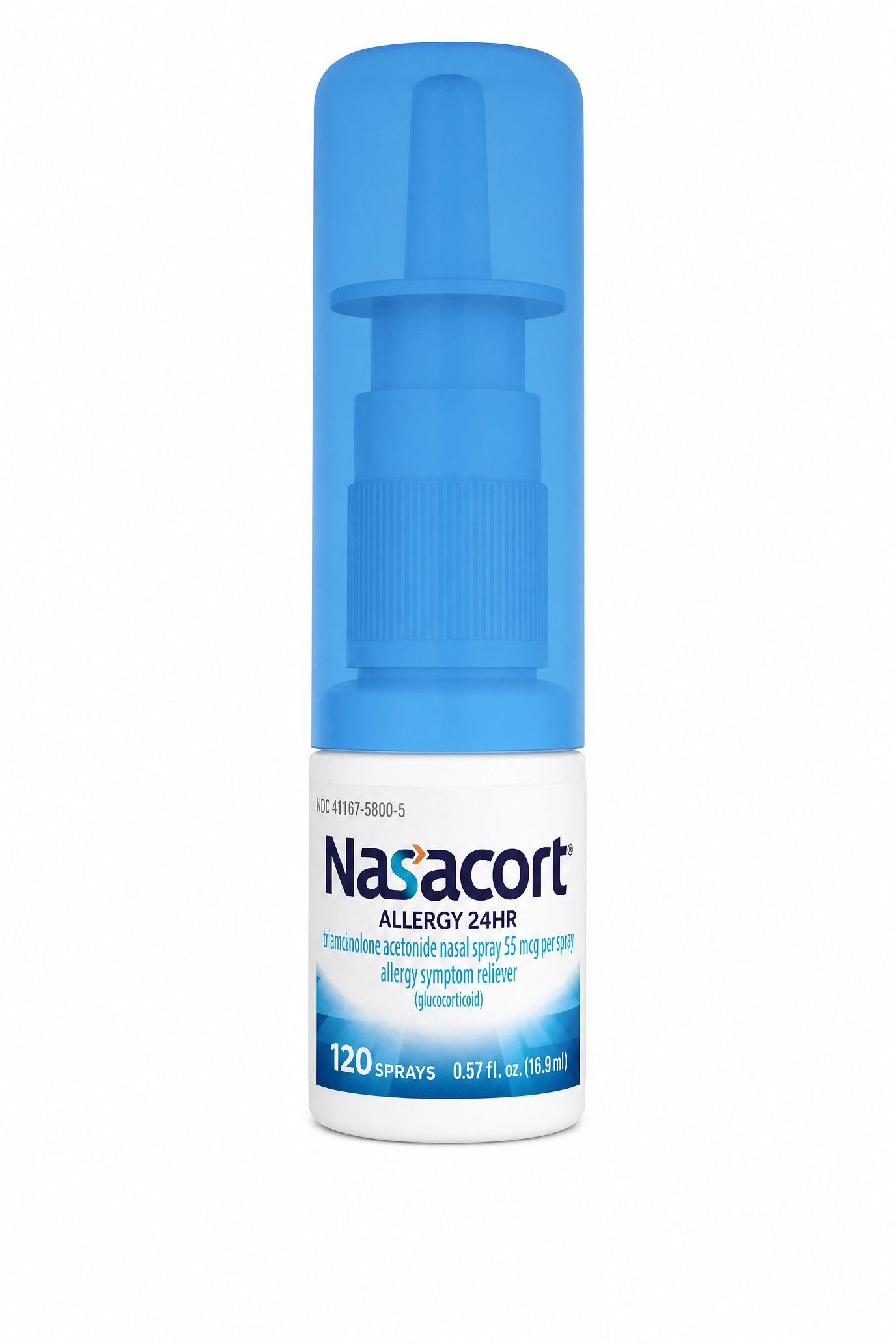
Scent-free, alcohol-free OTC INCS for ages 2+. Oral-cleft signal means avoid in pregnancy.
BP ByBestAllergyNasalSprays Editorial Team — Clinical Pharmacy, Editorial Pool BI Reviewed byBestAllergyNasalSprays Editorial Team — Adult Allergy & Immunology, Editorial Pool
Content updated
Evidence reviewed
First published
Literature review current through
Nasacort Allergy 24HR is an OTC intranasal corticosteroid containing triamcinolone acetonide 55 mcg per spray, with FDA Drug Facts labeling for use in adults and children 2 years of age and olderExpertOlder pharmacology data estimate intranasal triamcinolone acetonide systemic bioavailability around 46% (Daley-Yates 2001), though the current Nasacort AQ FDA prescribing information characterizes systemic absorption as minimal with peak plasma levels around 0.5 ng/mL after a 220-mcg dose. Among intranasal corticosteroids, triamcinolone is generally considered to have higher systemic exposure than newer agents like fluticasone or mometasoneExpertFlonase Allergy Relief (fluticasone propionate) contains phenylethyl alcohol, a floral-scented inactive ingredient that gives the spray a noticeable rose-like aroma. Nasacort, Flonase Sensimist, and Rhinocort do not contain phenylethyl alcohol or other fragrance compounds and are essentially scent-freeExpertIn a 12-month FDA-design-compliant randomized trial in children with perennial allergic rhinitis (Skoner 2015), daily intranasal triamcinolone acetonide (Nasacort) showed a small statistically significant reduction in growth velocity (-0.45 cm/year vs placebo) that stabilized after 2 months and approached baseline after stopping; no HPA-axis suppression was observedExpert
For eligible patients 13+ with multi-symptom, year-round, or failed-OTC rhinitis, Allermi is our #1 overall pick: a compounded telehealth Rx personalized by a board-certified allergist. Allermi is not prescribed under 18 or in pregnancy, so for pediatric and pregnancy populations, the OTC age-indicated and pregnancy-safe picks remain the right answer. Not sure if you qualify for Allermi? Check eligibility in 60 seconds.
Pregnancy caution
Triamcinolone acetonide showed teratogenic effects, including cleft palate, in animal reproduction studies (rats, rabbits, and monkeys) at inhaled doses near or below the maximum recommended human nasal dose, per the FDA Nasacort prescribing information. The FDA label also notes that rodents are more prone to teratogenic effects from corticosteroids than humans, and there are no adequate, well-controlled studies of intranasal triamcinolone in pregnant women.ExpertIt is not established that intranasal triamcinolone causes cleft palate or other malformations in humans when used as directed; clinicians frequently default to Rhinocort (budesonide) in pregnancy because budesonide has a more extensive pregnancy-specific human dataset.Expert See the full pregnancy-safe nasal spray guide; Rhinocort (budesonide) is pregnancy first-line.